What to Do In a Dental Emergency: A Guide for Yarralumla Patients
A dental emergency can happen to anyone, anywhere, at any time. And when it does, knowing what to do can make a real difference.
While dental emergencies can feel overwhelming, knowing the first steps to take can help you manage the situation until you receive professional care. If you live in Yarralumla or nearby Canberra suburbs, seeing an emergency dentist in Yarralumla as soon as possible can help relieve pain, treat infection, and protect your teeth.
What Is a Dental Emergency?
A dental emergency is any oral health problem that requires immediate professional attention to relieve severe pain, stop bleeding, treat infection, or prevent permanent damage to the teeth and surrounding tissues.
Not every dental issue is considered an emergency. However, some problems should be treated as soon as possible. According to the Australian Dental Association (ADA), urgent dental care may be required for conditions involving severe pain, swelling, trauma, or uncontrolled bleeding.
Common Dental Emergencies Include:
- Severe toothache that does not go away
- A cracked or broken tooth
- A knocked-out tooth
- A partially dislodged tooth
- Swelling in the gums, jaw, or face caused by a dental abscess
- A lost filling or crown
- Injuries to the gums, lips, or tongue that cause uncontrolled bleeding
If you experience any of these problems, it’s best to contact a dentist as soon as possible. Getting professional care early can prevent the problem from worsening and help protect your tooth. In these situations, visiting a local dental clinic promptly is important.
However, speed isn’t the only factor; in such instances, choosing the right clinic also matters. During dental emergencies, visiting an accredited dental practice helps ensure safe, high-quality care.
At Yarralumla Dental Care, our QIP accreditation reflects our commitment to maintaining consistent clinical standards.
First Things to Remember in a Dental Emergency
We understand that dental emergencies can feel stressful and confusing. If this happens, try to stay calm and follow these simple steps until you can see a dentist.
1. Contact a dentist immediately
Calling a dental clinic is the best first step. Many clinics keep emergency appointment slots available.
2. Protect the affected area
Avoid chewing on the injured tooth or area until a dentist examines it.
3. Reduce swelling
Applying a cold compress to the outside of the cheek can help reduce swelling and discomfort.
4. Manage pain safely
Over-the-counter pain relief can help, but never place aspirin directly on your gums or tooth, as this may irritate the tissue.
Things You Should Avoid During a Dental Emergency
During a dental emergency, some actions may accidentally make the situation worse. Until you see a dentist, try to avoid the following:
Try to avoid:
- Ignoring severe pain or swelling
- Using sharp objects to remove something stuck between teeth
- Placing aspirin directly on the gums
- Chewing on a damaged tooth
- Delaying treatment if bleeding or swelling continues
Common Dental Emergencies and What to Do:
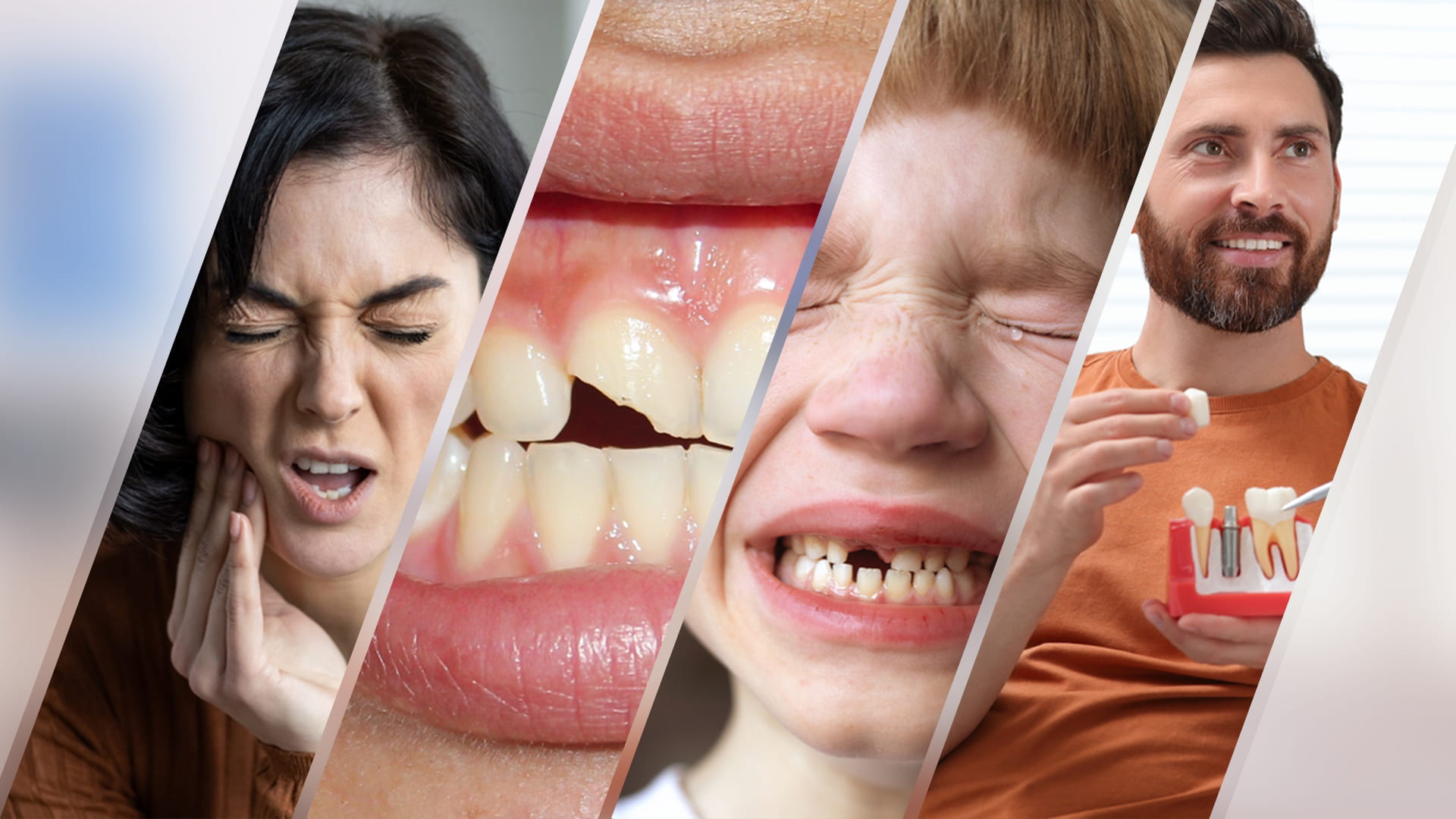
Knowing basic first-aid steps can help protect your teeth until you receive professional care.
Severe Toothache
Persistent tooth pain may indicate decay, infection, or nerve inflammation.
What you can do:
- Rinse your mouth with warm water.
- Use dental floss to remove any food stuck between teeth.
- Apply a cold compress if there is swelling.
- Take appropriate over-the-counter pain relief if needed.
- Avoid placing aspirin directly on gums.
If the pain continues, it’s best to see a dentist for proper tooth pain treatment as soon as possible.
Knocked-Out Tooth
A knocked-out tooth is one of the most urgent dental injuries, and quick action can sometimes save the tooth.
Steps to follow:
- Hold the tooth by the crown (the visible part).
- Rinse it gently with water if it’s dirty.
- Try to place it back into the socket if possible.
- If not, store it in milk or saliva.
See a dentist immediately, ideally within 30 to 60 minutes, to increase the chances of saving the tooth.
Cracked or Broken Tooth
A fractured tooth can cause sharp pain and sensitivity.
Immediate steps:
- Rinse the mouth with warm water.
- Save any broken fragments if possible.
- Apply a cold compress to reduce swelling.
- Avoid chewing on the affected side.
Prompt treatment helps prevent further damage or infection.
Dental Abscess
A dental abscess is a serious infection that forms around the root of a tooth or in the gums.
Symptoms may include:
- Severe throbbing pain
- Swelling in the gums or face
- Fever
- Bad taste in the mouth
An abscess requires urgent dental care because the infection can spread to other areas of the body if left untreated.
Lost Filling or Crown
Fillings and crowns can sometimes come loose or fall out.
If this happens:
- Keep the restoration if possible.
- Avoid chewing on that tooth.
- Schedule a dental appointment soon.
Temporary dental cement from a pharmacy may help protect the tooth until you see your dentist.
If You Are Not Sure Whether It Is a Dental Emergency
Some situations aren’t dental emergencies. In other words, you should still see your dentist as soon as possible, but it’s usually safe to wait for a regular appointment.
Examples of issues that are not usually considered dental emergencies include:
- Dull or mild toothache
- Small chip or crack in a tooth
- Broken braces
- Object stuck between your teeth.
- Minor soft tissue injury (like a small cut or sore)
However, if you experience severe pain, swelling, uncontrolled bleeding, or facial trauma, you should seek dental or medical care immediately.
Emergency Dental Care in Yarralumla and Nearby Suburbs
For residents in Yarralumla and nearby Canberra suburbs, having access to emergency dental care close to home can make a stressful situation much easier to manage.
Patients commonly visit from nearby suburbs such as:
- Deakin
- Curtin
- Red Hill
- Weston Creek
- Acton
- Barton
If you experience a dental emergency, contacting a local dental clinic such as Yarralumla Dental Care can help ensure prompt evaluation and treatment.
What to Expect During an Emergency Dental Visit

During an emergency dental visit, the priority is to identify the cause of the problem and provide relief as quickly as possible.
Your dentist will begin by asking about your symptoms and examining your teeth, gums, and jaw. In some cases, dental X-rays may be taken to assess the extent of the problem.
Depending on the condition, treatment may include:
- Dental X-rays to assess damage
- Antibiotics to control infection
- Temporary or permanent fillings
- Root canal therapy for infected pulp
- Re-implantation of a knocked-out tooth
- Repairing broken crowns or restorations
In some cases, temporary treatment may be provided first, followed by a scheduled appointment to complete the restoration.
If you’re unsure whether your symptoms require urgent care, it’s always safest to contact a dentist for advice.
How Can I Manage My Symptoms Until I See My Dentist?
- Dull toothache: Rinse your mouth with warm water. Floss your teeth to see if there’s anything lodged between them. Take an over-the-counter pain reliever, such as acetaminophen, naproxen or ibuprofen. Never place aspirin directly on your gums. It will burn your tissue. Call your dentist to schedule an appointment.
- Small chip or crack in your tooth: If you have a chip or crack in your tooth that’s not causing any pain, it’s OK to wait until your dentist can see you. But if any sharp edges irritate your tongue or cheeks, cover the area with orthodontic wax. (You can purchase orthodontic wax in the oral health aisle at most pharmacies.)
- Broken braces: Unless you have bleeding from your mouth, broken braces usually aren’t a dental emergency. If you have a broken wire that’s poking you in the cheek or tongue, gently bend the end of the wire using a pencil eraser or other blunt object. Then cover the wire with orthodontic wax until you can see your dentist or orthodontist.
- Object stuck between your teeth: If you have something lodged between your teeth, try to gently remove it using dental floss or an interproximal brush. Never try to remove an object with sharp instruments.
- Minor soft tissue injury: Thoroughly rinse your mouth with a saltwater solution or antibacterial mouthwash. Apply pressure to the affected area using a piece of clean cotton gauze. The bleeding should stop within 15 to 20 minutes. If you still have severe bleeding after that, you should seek immediate care.
Need an Emergency Dentist in Yarralumla?
Dental emergencies can escalate quickly if left untreated, which is why it’s important to have them assessed by a dental professional.
If you experience a dental emergency in Yarralumla or nearby Canberra suburbs, the team at Yarralumla Dental Care is here to help. Prompt care from a local dentist can relieve pain, address infection, and help protect your long-term oral health.
Frequently Asked Questions
What qualifies as a dental emergency?

A dental emergency typically involves severe pain, trauma, infection, or uncontrolled bleeding in the mouth that requires immediate attention from a dentist.
Should I go to the hospital for a dental emergency?
Most dental emergencies should be treated by a dentist. However, if you experience severe facial trauma, difficulty breathing, or heavy bleeding, visiting a hospital emergency department may be necessary.
Can a toothache be a dental emergency?
Yes. Severe or persistent tooth pain may indicate infection or nerve damage and should be assessed by a dentist as soon as possible.
How quickly should I see an emergency dentist?
Ideally, you should seek care immediately or within the same day, especially if there is swelling, infection, or a knocked-out tooth.
Can a knocked-out tooth be saved?
In some cases, yes. If the tooth is handled correctly and reimplanted within about 30–60 minutes, the chances of saving it are higher.